
On Experience and Efficiency
What shifting market logics reveal about education

Luckin Coffee is expanding. Starbucks is contracting.
That contrast has been circulating as a business story, but it also tells a parallel story about education — specifically, what happens when systems built to center experience come under pressure from systems built to maximize efficiency.
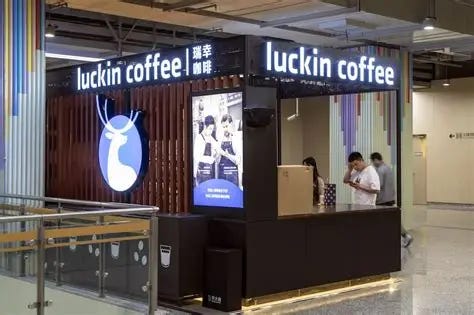
Luckin Coffee was built around efficiency from the start. Mobile ordering is the default. Footprints are small, seating limited, and the infrastructure designed around automation and repeatability. A cup of Luckin coffee costs a fraction of what Starbucks charges. Coffee is treated as a utility rather than an occasion — something to pick up between meetings, not somewhere to stay. The model is organized around removing friction.
Starbucks, by contrast, grew by leaning into experience. What it called a “third place” — neither home nor work, but somewhere to linger between the two. Comfortable seating. Music at a conversational volume. A barista who writes your name on the cup. For years, the value proposition extended well beyond the product itself — you weren’t just buying coffee; you were buying time and space.
Both models made sense in the environments that produced them. For a long time, both worked.
What’s changing now isn’t simply consumer taste. It’s context.
When the environment shifts
Recent reporting on Western brands in China describes a recalibration underway. Slower growth, intensified competition from domestic firms, and more price-sensitive consumers have made experience-heavy models harder to sustain at scale. Starbucks, once buoyed by global cachet, is now experimenting with deeper localization and structural changes to remain viable.
What’s notable isn’t that Starbucks misread China, but that the conditions that once rewarded its approach no longer reliably exist.
Luckin, meanwhile, continues to operate as it always has. Its model assumes that people know what they want, that speed is a form of respect, and that the system’s job is to function smoothly without asking for additional attention. As conditions shift, that clarity becomes an advantage.
This is not a story about right and wrong, but about alignment.
What happens when efficiency reshapes education
What we are seeing in consumer markets is not a rejection of experience, but a shift in what institutions can afford to build into their everyday design.
Experience has not become less valuable; it has become harder to assume. When systems come under pressure, efficiency becomes the baseline. Experience becomes conditional.
Education in the U.S. still speaks the language of experience. We encourage students to explore, to reflect, to grow into themselves. We frame learning as formation — seminars that privilege discussion, electives that invite curiosity, advising conversations that unfold over time.
At the same time, many of the systems students move through reward something else: speed, optimization, early signaling, reduced risk. Timelines compress, stakes rise, and pathways narrow. Students begin mapping summer internships in ninth grade, and course selections become strategic calculations rather than intellectual risks. Résumés are built deliberately; exploration is deferred until it feels safe.
Students are asked to engage deeply while moving quickly — to explore while optimizing. The result is not entitlement or fragility. It is disorientation.
I have spent years talking with art and music faculty about the value of their disciplines — disciplines that teach students how to sit with ambiguity, how to revise, how to see differently. And yet those classes are often the first to go when a student begins thinking strategically. I have had students tell me they dropped the class they loved because it “wasn’t strategic.”
In education, we continue to promise experience while redesigning systems around efficiency — and then we are surprised when students feel anxious, behind, or unsure what they are doing wrong.
The cost of holistic
This raises a harder question: what does it mean to afford holistic education?
Not simply financially, but structurally.
Holistic systems give people permission to think slowly — to sit with ambiguity, weigh competing values, and make non-optimized choices. They create space for judgment to develop alongside execution: unhurried conversations, time to revise an idea, room to change direction without penalty.
Efficiency-driven systems reward reliability, speed, and adherence to predefined pathways. They teach people how to operate within existing structures — meet the deadline, hit the benchmark, secure the credential — but rarely pause to examine how those structures were shaped.
If the capacity to exercise judgment is genuinely valuable — and I believe it is — then it has to be designed for, not left to emerge as a side effect of having enough time and enough margin. The question is not whether holistic education matters. It is whether we are willing to build it deliberately into systems, rather than hoping students absorb it from institutions that can still afford to move slowly.
What systems reward
No one is explicitly dividing people into categories. There is no formal sorting mechanism.
But systems reward certain behaviors more consistently than others, and over time those incentives shape habits of mind.
Those with access to longer timelines, smaller classes, and more advising are more likely to practice framing problems as well as solving them. They learn to ask what matters, not only how to proceed.
Those moving through tighter, more constrained systems are more often rewarded for minimizing risk, meeting external benchmarks, and navigating efficiently within fixed parameters. A student choosing courses to protect a GPA rather than to follow a genuine question is not lacking ambition. They are responding rationally to a system that has made exploration expensive.
Over time, this shapes not intelligence or effort so much as agency.
Some people are given repeated opportunities to author decisions. Others are more often rewarded for implementing them.
That distinction reflects what systems make room for — not what individuals are capable of.
A healthy society needs both judgment and execution. It becomes unstable, however, when the capacity to question, reinterpret, and redirect systems is concentrated among those already advantaged.
At that point, holistic education shifts function. It stops being only about personal growth and begins to operate as leadership formation — whether or not we name it that way.
Judgment, in that context, becomes unevenly distributed.
That is not simply an educational issue. It is a civic one.
What this makes visible
The answer is not to abandon experience or holistic growth. That would be a mistake.
But it does require more honesty about the conditions that make experience possible — and how unevenly those conditions are now distributed.
Experience is invaluable, and it is also fragile.
If it is meant to remain part of education rather than a byproduct of privilege, it cannot be treated as ambient. It has to be deliberately protected and intentionally designed for.
Otherwise, students are left to internalize a private failure: not that the system moved too quickly to deliver what it promised, but that they somehow failed to extract the growth themselves.
That’s a lesson we may not intend to teach — but are teaching nonetheless.
This is ironically accurate framing in a quick read. I can’t help thinking that the era of hyper efficiency that AI models seem to be midwifing (also ironically) raises the premium for human experience. Technology, specifically rigorous coding, and what amounts to drilling on pattern recognition have increasingly dominated 2 1/2 generations of college students’ career ambitions. If AI models are busy and better at both, students learning how to ask the “why” questions and deeply involve themselves in assembling answers re-grows in relative importance.